
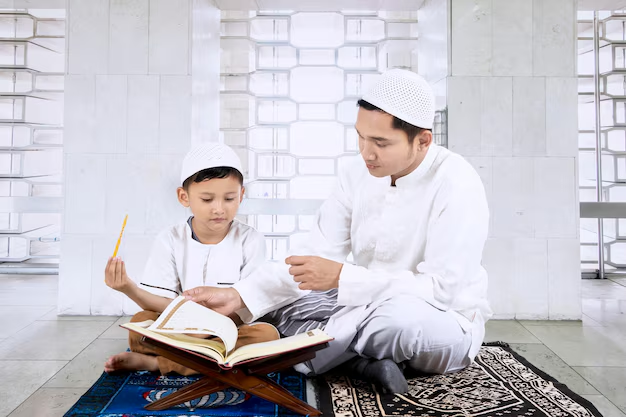


Foundations of Quranic Reading – Qaida
Duration: Approximately 3 to 4 months (Daily –30 minutes)
Target Group: Children (ages 4 and up)
Course Objectives:
- To teach correct pronunciation of Arabic letters.
- To prepare students for fluent Quran reading.
- To introduce basic Tajweed (rules of Quranic recitation).
- To develop confidence and love for the Quran.
Teaching Method:
- Interactive online classes (voice/video).
- Repetition, listening, reading, and correction.
- Weekly assessments and feedback
Add Your Heading Text Here
Special Child Care
Special Children is to help children with needs thrive through compassion
Charity & Donation
Special Children is to help children with needs thrive through compassion
Education for Poor
Special Children is to help children with needs thrive through compassion

Lesson-wise Breakdown:
- Recognition of 29 Arabic letters
- Proper articulation (Makharij)
- Combining two or more letters (e.g. اب، تم، ثم)
- Fatha (Zabar), Kasrah (Zer), Dammah (Pesh)
- Reading simple letters with short vowels
- Alif, Waw, Ya used for elongation
Examples: قَالَ، يَقُولُ، يُقِيمُونَ
ٍ ٌ (An, In, Un sounds)
Practice with short words
- Silent letters marked with Sukoon
E.g. أَبْ، مَنْ، عَبْدُ
- Emphasis/doubling of letters
E.g. إِنَّ، رَبِّ، قَوَّارِبُ
Basic Tajweed rules:
- Idghaam (merging)
- Ikhfaa (hiding)
- Ithhaar (clear)
- Qalb (changing)
Rules of Meem Sakin with examples
- Ikhfaa Shafawi
- Idghaam Shafawi
- Ithhaar Shafawi
- Waw and Ya preceded by Fatha
E.g. خَوْف، بَيْت
- Natural Madd, Compulsory Madd, Permissible Madd, etc.
- Symbols and their correct timing
- Where and how to stop in recitation
Symbols: م، ج، ط، لا
- Basic rules of starting and stopping in the Quran
Assessments:
- Oral and reading test after every few lessons
- Final test: fluency, recognition, and Tajweed
End of Course:
- Students begin reciting the Holy Qur’an
- Completion certificate (optional)
- Transition to Juz Amma or full Quran reading
